How to Make Friends Without Drinking
By ValuePair · · 6 min read
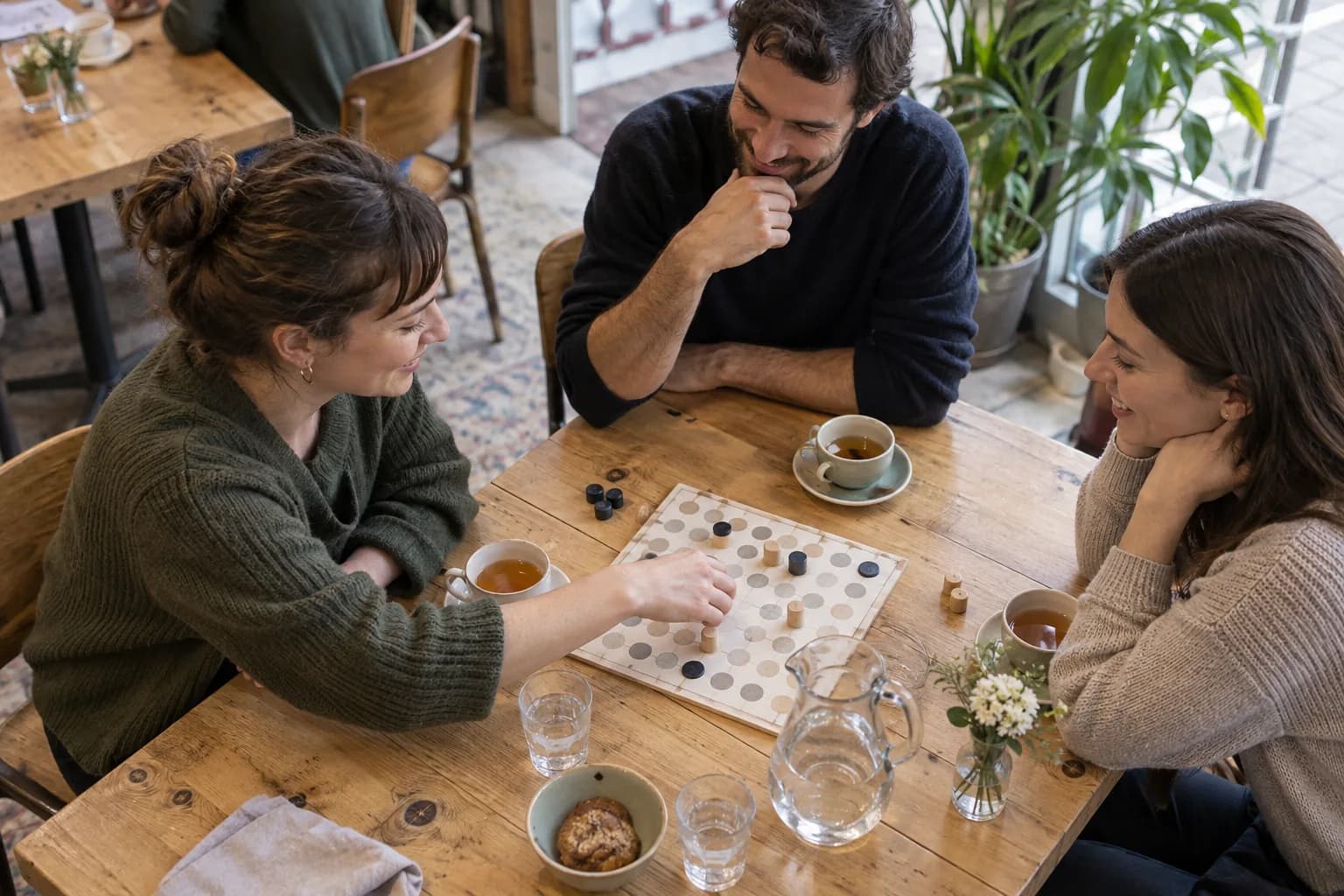
You can want company without wanting a drink. Find settings that fit your boundaries, make invitations clear and build a social routine around something you enjoy.
To make friends without drinking, choose an activity where you have something to do together, then check whether the setting actually fits your needs. Not drinking yourself, avoiding pressure to drink and wanting an entirely alcohol-free space are different requirements. You can be clear about yours without sharing a personal reason.
You might never have enjoyed alcohol, be taking a break or simply prefer doing something else. This guide is about finding company and making plans. You do not need to adopt a label or persuade other people to make the same choice.
Decide what you want from the setting
- You will not drink, but you are comfortable if others do: check that you can participate without buying alcohol and without repeated pressure.
- You want no alcohol in the setting: ask whether the whole event or venue is alcohol-free, including what participants can bring.
- You want an activity that does not revolve around drinks: look at workshops, walks, volunteering, games or sport, then check the actual format.
A daytime event, coffee shop or board-game evening is not automatically alcohol-free. Some cafés serve alcohol, some groups move to a bar afterwards, and some events allow people to bring their own. A short question before booking can prevent an awkward surprise.
Look for a shared focus
Choose something you want to participate in: a practical class, a regular walking group, an open adult game table, a reading discussion or a volunteer task. The activity gives the first conversation a subject beyond what everyone is drinking.
Check how newcomers join and whether it is a recurring group. An event with free entry might still require equipment, transport or a purchase. Ask about those details as well as the alcohol policy. If you have not done the activity before, confirm that beginners are welcome rather than assuming a “social” session includes instruction.
Online communities and one-to-one introductions can also be a starting point. Our online friendship guide explains their different formats. You can build some familiarity before suggesting an in-person plan that fits your boundaries.
Ask an organiser a specific question
You can write: “I’m interested in joining and want to check the format. Is alcohol served or brought by participants, and is there any expectation to buy a drink?” If you need an alcohol-free setting, say that directly. A general answer such as “Everyone is welcome” may not answer the practical question.
You can also ask what happens after the activity. If the main session suits you but the group goes to a bar later, decide whether you want to attend only the activity or find another group. You do not have to negotiate an exception at every visit to prove that you are sociable.
Decline a drink without turning it into a discussion
A brief statement can be enough: “No thanks, I’m not drinking,” or “I’m happy with this.” You can then return to the shared activity or ask a different question. You do not owe a new acquaintance medical information, a history or a defence of your preference.
If someone keeps pushing, make the boundary explicit: “I’ve answered that. Please stop asking.” You can leave a conversation or an event that does not respect the limit. At the same time, another person choosing to drink is not automatically a sign that a friendship cannot work; the question is whether your plans and boundaries can coexist comfortably.
Offer an alternative people can accept
“I’d like to see you. Could we do a walk on Sunday instead?” is clearer than declining an invitation without suggesting anything else. You could propose a meal at a suitable venue, a museum visit, a class or a shared hobby. Check the setting rather than calling every alternative alcohol-free.
For someone you have just met, keep the plan small: “I’m going to the next workshop. Would you like to meet a little early and get a coffee nearby?” If avoiding alcohol completely matters, choose and verify the meeting place first. The invitation can stay friendly and ordinary.
Keep familiar friendships, if the format can change
You may enjoy your existing friends and want a different way to spend time together. Try naming what you want to keep: “I miss talking properly. Could we make our next catch-up a lunch?” Ask rather than assuming that the group will only meet around alcohol.
If some people prefer the old format, you can arrange separate plans with those who are interested. You can also seek new activity-based friends without treating every existing friendship as a problem. Our acquaintances guide covers building a connection through follow-up and mutual effort.
Give the new routine room to become familiar
After a first visit, assess the actual experience: did the activity interest you, could you participate comfortably, and would you be willing to return? A quiet first session does not tell you everything about the group. If the environment fits, try getting to know one person through a small conversation at the next meeting.
If the format does not suit you, adjust it. You might prefer a smaller group, a different time of day or an introduction where you can answer at your own pace. The adult friendship guide helps identify which step needs attention.
An optional one-to-one beginning
ValuePair offers one introduction at a time. With friendship as your intention, you begin with the same 14 questions, with each answer revealed after both people have answered. It is asynchronous, so starting a conversation does not require arranging an evening out.
That format does not guarantee that another person shares your preferences or that a later meeting will be alcohol-free. Discuss a plan that works for both of you. Core matching, discovery and Chat remain free and ad-free, with optional Premium extras unlocked during beta. You can try ValuePair or read the FAQ.
Sources and editorial note
The APA’s guidance on socialising without alcohol discusses planning and social pressure. The American Bar Association’s article on socialising without drinking offers a professional-context perspective. Sources checked October 9, 2026. This guide uses those social-setting themes; the organiser questions and invitations are editorial examples, not medical or treatment guidance.